
The Benefits of Proxipel Technology for Landscape Architects, Growing Media Manufacturers, and Soil Improvement. An Innovative Formulation.
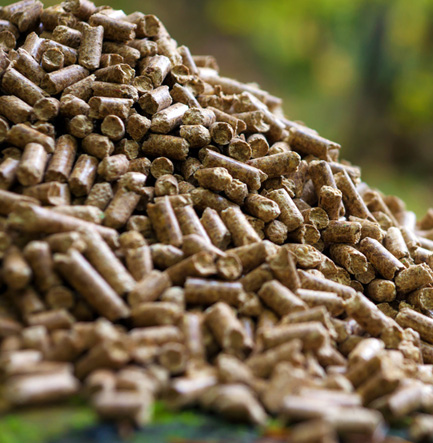
Pelletization is a process for converting lignocellulosic substrates into compact, homogeneous particles with a precisely controlled moisture content. These substrates, composed mainly of plant fibers, are derived from renewable biomass such as wood or agricultural residues. They are widely used for heat production or animal feed. This technology offers innovative solutions for soil-based applications, targeting the landscaping, growing media, and soil improvement markets. Due to their compact and versatile structure, pellets address major environmental and economic challenges. Their ability to deliver active ingredients and incorporate complex formulations offers a unique and cost-effective dosage form for users accustomed to working with bulk materials that are heavy, bulky, and difficult to store, handle, or transport.
Customers: landscapers, farmers, earthwork and landscaping companies, and soil remediation companies.
Advantages of Granulation
Thus, granulation offers several practical and technical advantages.
Pellets are easy to transport and store thanks to their high density7. Compared to compost or biochar, for example, this density greatly facilitates biomass management.
The uniformity of the product also ensures perfect dosing and high reproducibility. Their consistent size allows for precise dosing during application3. This is particularly true for agricultural applications, where dosing an active ingredient can be challenging if it is highly concentrated.
Dust reduction is another factor that requires careful consideration. Unlike powdery substrates, pellets generate less dust, thereby improving safety during handling7 without requiring special equipment.
But one of the major strengths of pellets lies in their ability to release active ingredients through two mechanisms: gradual rehydration and the opening of the pellet, and its rapid biodegradation in soil. The pellets thus allow for the gradual diffusion of nutrients or active substances into the soil3, just as the soil becomes biologically active again at the end of winter.
Pellets offer significant added value, particularly for landscaping professionals:
Mulching involves handling large quantities of loose, inconsistent materials that are applied by hand. Now widely used, mulch protects the soil from erosion while improving its appearance and, in some cases, adds nitrogen and carbon to the soil. Pellets, which are more compact, will gradually break down upon contact with moisture in the air, limiting the initial amount of material applied.
Lignocellulosic materials will improve poor soils and enrich them with organic matter. In this way, the pellets revitalize degraded soils2. Compared to applying compost, pellets are significantly easier to use and result in a substantial reduction in transportation costs.
Their ability to retain moisture is also particularly useful in landscaping projects in arid conditions1. Water retention capacity will be greatly improved even on anthroposols that undergo frequent disturbance.
In agriculture and horticulture, pellets play a key role as growing media. Indeed, the qualities mentioned above help create conditions that are highly conducive to plant growth.
Improving soil structure promotes soil aeration and permeability, which in turn support root development6.
Pellets also limit losses due to leaching, thereby optimizing fertilizer use2. This approach opens up exciting possibilities for the production of biostimulants and biocontrol agents.
Finally, thanks to their absorbency, they maintain an optimal moisture level for crops1.
Lignocellulosic pellets are also essential for the restoration of degraded soils, which can be strategically important for land development or restoration companies.
They enrich the soil with organic carbon, boosting its fertility6 and microbial biodiversity. They can thus revitalize the carbon cycle in soil where biological activity has been severely limited by the toxicity of pollutants or by extreme biotic conditions. By promoting the activity of beneficial microorganisms, they contribute to the biological regeneration of the soil6.
Certain formulations can absorb or neutralize contaminants in the soil5, by binding pollutants through adsorption or absorption.
The Benefits of PROXIPEL Technology
Proxipel’s mobile pellet production technology Proxipel follows several key steps that give the resulting products significant competitive advantages.
Preparing lignocellulosic substrates by grinding to achieve an appropriate particle size not only ensures pellet cohesion but also influences the physicochemical properties of the final product. In fact, just as in human nutrition, fiber size has a direct impact on enzymatic stimulation and the microbial response in soil.
The incorporation of active additives during the process allows for the addition of nutrients, surfactants, or other specific agents depending on the intended application3.
At the heart of Proxipel’s technology, granulation and drying using their patented system result in a stable and durable form.
The combination of these technical properties yields significant economic and environmental benefits.
Thus Proxipel’s technology offers a twofold opportunity.
First and foremost, through the recovery of lignocellulosic waste. It transforms agricultural, forestry, and industrial residues into useful and profitable products5.
Next, the significant reduction in logistics costs—made possible by the high density of the pellets—lowers transportation and storage expenses7.
Ultimately, Proxipel helps promote a circular economy. This process is part of a sustainable approach that reuses local resources while limiting carbon emissions2.
Thanks to its many advantages, this technology offers the potential to overcome certain major challenges by enabling the optimization of formulations to tailor compositions to the specific needs of different markets. It is now possible to consider new applications and explore innovative uses such as bioenergy or wastewater treatment. The prospects remain vast, with untapped potential for innovation in several key areas.
Pellet production using mobile units represents a promising solution for improving the efficiency and sustainability of land-based applications across various sectors. By utilizing lignocellulosic substrates, this technology addresses environmental challenges while offering significant economic benefits.
By Gil Burban
Quotes:
- https://inter-pellets.com/blogs/granules-bois/faire-du-pellet-dans-le-cadre-de-la-production-de-champignons
- https://www.bioeconomie-hautsdefrance.fr/wp-content/uploads/2020/08/Lignoguide.pdf
- https://www.jrsfr.com/fr/plant-cultivation/processus-de-production.php
- https://popups.uliege.be/1780-4507/index.php?id=6226&lang=es
- https://patents.google.com/patent/FR3059676A1/fr
- https://www.univ-reims.fr/aebb/media-files/31039/fiche-aebb-fr-gestion-des-sols-web.pdf
- https://services.totalenergies.fr/particuliers/conseils/energies-habitat/granules-bois/avantages-et-limites-des-pellets
- https://horizon.documentation.ird.fr/exl-doc/pleins_textes/2023-12/15419.pdf
